

GolfTechIQ is reader-supported. As an Amazon Associate, we earn from qualifying purchases.
Short answer: an indoor putting green is a step up from a roll-out putting mat: a wider, heavier surface (usually 4 to 12 feet wide) with real cups, a firm base and adjustable break. For most homes, a Big Moss Country Club (6 x 10 feet, about $489) gives the best mix of size, speed and price. If you want a green that feels built in, Tour Links modular greens start around $898 for 4 x 10 feet and run about $2,000 to $2,800 for 8 x 12 and 12 x 12 feet. A DIY green on plywood and turf can cover a whole room for less, but takes a weekend and some care to get flat.
This guide covers the bigger, semi-permanent indoor greens. If you just want a 9 to 15 foot mat you can roll up, see our best putting mats guide; for an outdoor green, see the backyard putting green guide. Picks are made by the numbers, from size, green speed, cups and price, not hands-on testing.
Indoor putting greens at a glance
| Green | Size | Cups | Speed (maker) | Price (approx.) |
|---|---|---|---|---|
| Big Moss Country Club | 6 x 10, 6 x 12 or 6 x 15 ft | 4 | 12+ Stimp | From $489 |
| Big Moss Super G V2 | Several sizes | 3 sizes per hole set | 12+ Stimp | About $719 |
| Big Moss Long Putt | 6 x 30 or 6 x 60 ft | 1 | 12+ Stimp | From $899 |
| Tour Links Premium | 4 x 10 to 12 x 12 ft | 2 to 4 | About 11.5 Stimp | $898 to $2,784 |
| Fiberbuilt putting green | 4 x 8 or 4 x 10 ft | 2 | 9 Stimp | $829 to $989 |
| DIY plywood and turf | Any size | Your choice | Depends on turf | Materials only |
1. Big Moss Country Club: best indoor putting green for most homes
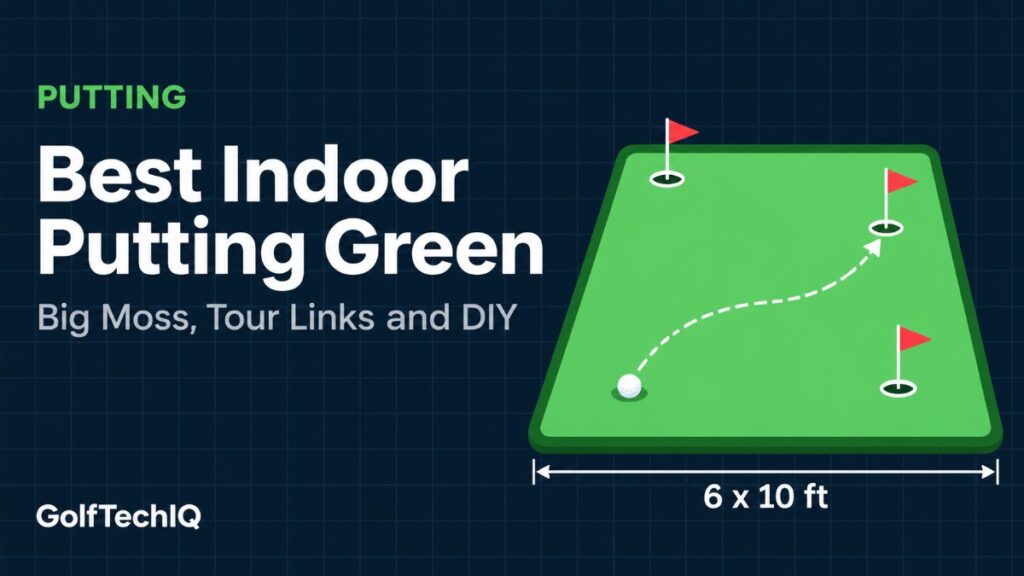
The Country Club is a 6 x 10 foot green with three regulation cups on the edges and a smaller 3-inch hole in the center for accuracy work. It also comes in 6 x 12 and 6 x 15 feet, and Big Moss rates the surface at 12+ on the stimpmeter, which is closer to a fast course green than most mats. It includes a removable foundation and a stadium backstop, so it sits flat on carpet or a hard floor and stops missed putts.
- Why it’s the pick: 6 feet of width gives you real breaking putts and multiple cups for under $500.
- Trade-off: at 10 feet it is long enough for short-game work, not lag putting. Go 6 x 15 if you have the room.
2. Tour Links Premium: best modular green that feels built in
Tour Links greens are built on interlocking panels, so they sit dead flat and do not ripple like a rolled mat. Contour pads under the panels let you add break, the maker rates the speed at about 11.5, and the same green works indoors or outdoors. Sizes run from 4 x 10 feet (about $898) to 8 x 12 feet (about $1,988) and 12 x 12 feet (about $2,784), with three or four cups on the larger sizes.
- Why it’s the pick: the most permanent-feeling green you can buy without a custom install.
- Trade-off: price, and some owners report the roll runs slower than the advertised speed.
3. Big Moss Long Putt: best for lag putting
Most indoor greens top out around 15 feet, which leaves out the long putts that cause three-putts. The Long Putt comes in 6 x 30 and 6 x 60 foot lengths, starting around $899, with a backstop and a Break Snake to add contour. It needs a long basement, hallway or garage, but nothing else on this list lets you practice distance control indoors.
4. Big Moss Super G V2: best for chipping and putting together
The Super G adds more contour and a chipping mat to the Big Moss surface, and each green includes 2-inch, 3-inch and regulation cups so you can practice to smaller targets. At about $719 it costs more than the Country Club, so it makes the most sense if you want short-game variety, not just straight putts.
5. DIY indoor putting green: best for a full room
If you want a green that fills a basement or bonus room, building one is usually the cheapest way per square foot. Indoors you skip the gravel base an outdoor green needs: a plywood or OSB frame on the floor, a foam pad for a softer roll, and putting turf glued or stapled on top, with cup holes cut through the frame. Our backyard putting green guide puts DIY materials at roughly $5 to $10 per square foot outdoors; an indoor build is usually at or below that because there is no base to dig and compact.
- Build the frame dead level first; you can add shims under it later for break.
- Pick turf rated for putting (low, dense pile), not landscape grass.
- Leave 2 to 3 feet around the edges so you can stand and stroke without stepping off.
- Use a deeper cup and a frame at least 4 inches tall so the ball actually drops.
How to choose an indoor putting green
- Width matters more than length. A 4 foot wide green only gives you straight putts; 6 feet or wider lets you play break.
- Speed: look for 10 to 12 on the stimpmeter to match a typical course. Many cheap mats run faster or slower than they claim.
- Cups: real drop-in cups beat ramps. Smaller practice holes help with accuracy.
- Base: a rigid foundation or panel system stays flat over carpet; foam-backed mats can bunch.
- Room: add about 3 feet to the green’s length for your stance and stroke.
Building a golf room? An indoor green fits well beside or under a simulator. Check your space with our golf simulator room size calculator, and see the golf hitting mat guide for the full-swing side of the room.
Part of our guide: Golf Practice at Home
FAQ
What is the difference between a putting mat and an indoor putting green?
A putting mat is usually 1 to 4 feet wide and rolls up for storage. An indoor putting green is wider (often 6 feet or more), sits on a rigid base, has several real cups and lets you add break, so it behaves more like a real green.
How much does an indoor putting green cost?
Prefab indoor greens start around $489 for a 6 x 10 foot Big Moss Country Club and run about $900 to $2,800 for modular Tour Links greens from 4 x 10 to 12 x 12 feet. A DIY build costs mostly turf and plywood, and custom installers charge more.
What size indoor putting green should I get?
For most homes, 6 x 10 to 6 x 15 feet covers the short putts that matter most. Go longer, like a 6 x 30 foot green, only if you want to practice lag putting.
Can you put an indoor putting green on carpet?
Yes. Greens with a rigid foundation or interlocking panels sit flat on carpet. Thinner foam mats can bunch, so check the base before you buy.
How fast should an indoor putting green be?
About 10 to 12 on the stimpmeter matches most golf courses. Faster than that can make you decelerate on real greens.
Sources: Big Moss Country Club listing (Shop Indoor Golf), Big Moss Long Putt, Big Moss Super G V2, Tour Links 8 x 12 (Rain or Shine Golf), Fiberbuilt putting green. Prices checked November 2026 and change often.
Keep reading
 Best Golf Head Covers 2026: Driver, Putter, Iron and Funny Headcovers
Eight golf club head covers picked by fit, material and price, from synthetic leather and knit wood sets to magnetic…
 Bucket Golf Rules: How to Play and Score (Plus Bar Golf)
How to play bucket golf: par 3 holes, one club, the bucket bonus, hazards and scoring, plus course setup tips,…
 Bruce Bolt Golf Gloves (2026): Price, Sizing and Are They Worth It?
What you get with Bruce Bolt golf gloves: prices for the Original, Creator and Signature Series, the 0.45mm cabretta leather,…