

GolfTechIQ is reader-supported. When you buy through links on this page, we may earn a commission at no extra cost to you. As an Amazon Associate, we earn from qualifying purchases.
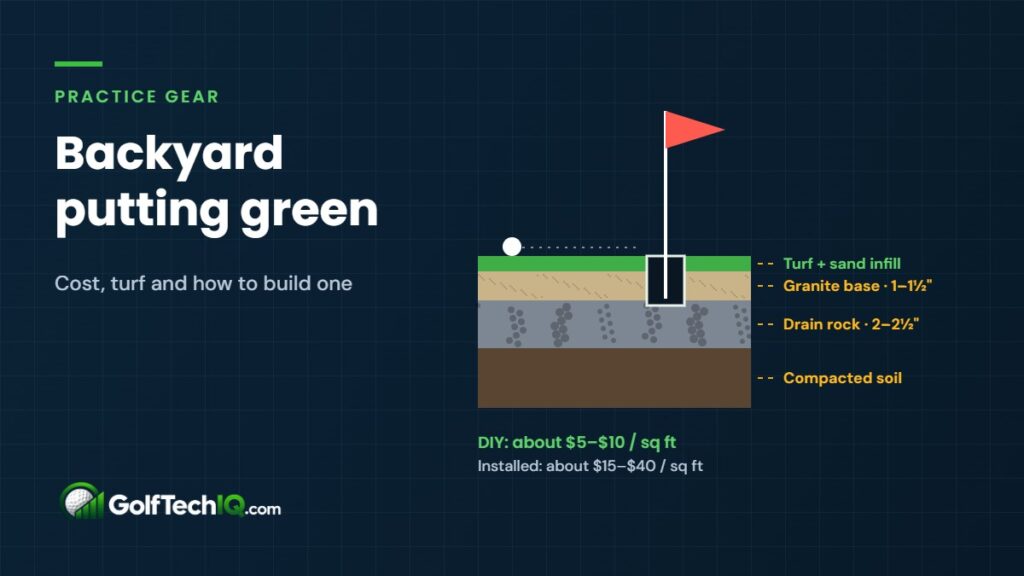
Short answer: a backyard putting green is synthetic putting turf laid over a compacted gravel base, with cups set in the ground and sand brushed into the turf. A professional install costs about $15–$40 per square foot; Angi puts the average project at about $4,300. Building it yourself runs roughly $5–$10 per square foot, so a 200-square-foot green costs about $1,000–$2,000 in materials. The base is the part that matters most: get it flat, compacted and draining well, and the turf will roll true for years.
Below: what it costs, which putting green turf to buy, and how to build one step by step.
Backyard putting green cost
| Green size | DIY (about $5–$10/sq ft) | Installed (about $15–$40/sq ft) |
|---|---|---|
| 100 sq ft (about 10 × 10) | $500–$1,000 | $1,500–$4,000 |
| 250 sq ft (about 12 × 20) | $1,250–$2,500 | $3,750–$10,000 |
| 500 sq ft (about 20 × 25) | $2,500–$5,000 | $7,500–$20,000 |
What drives the price:
- Turf: synthetic putting turf runs about $5–$25 per square foot. Nylon costs more than polypropylene.
- Site prep: removing sod, excavating and hauling soil. Angi lists excavation at $50–$200 per cubic yard.
- Base material: crushed rock and decomposed granite, plus a plate compactor rental.
- Labor: turf installers typically charge $50–$150 an hour.
- Extras: each additional cup and flag adds about $150 installed, and fringe or chipping turf around the green adds more.
A natural-grass green costs less to plant (about $1–$2 per square foot for sod) but needs daily or weekly mowing and care to putt well, which is why most home greens are synthetic.
Choosing putting green turf
| Turf fiber | Feel and speed | Durability | Best for |
|---|---|---|---|
| Nylon | Consistent, true roll | Highest; holds its shape | Permanent greens that get heavy use |
| Polypropylene | Slick and fast | Lower; can wear faster | Budget greens and fast-green fans |
| Polyethylene | Softer, slower | Good | Landscape lawns; not ideal for putting unless made for greens |
- Shorter, denser pile rolls faster and smoother. Taller pile is slower and can make the ball wobble.
- Sand-filled turf lets you tune the speed with infill and holds chip shots better.
- Buy one roll wide enough to cover the green if you can. Rolls come up to about 13 feet wide, and every seam is a chance for a bump.
- Add fringe turf around the edge if you want to practice chipping onto the green.
See putting green turf on Amazon
How to build a backyard putting green
1. Pick the spot and plan the shape
Choose a fairly level area that drains well, away from tree roots and sprinkler heads. Call 811 before you dig so buried utility lines get marked. Most backyard greens are 150–500 square feet; a free-form shape looks more natural than a rectangle. Plan each cup at least 3 feet from the edge and from other cups.
2. Excavate
Remove the grass and dig out about 4–6 inches of soil, deeper in freeze-thaw climates or where the soil holds water. A rented sod cutter makes this much faster.
3. Build and compact the base
- Spread about 2–2½ inches of crushed drain rock and compact it with a plate compactor.
- Add 1–1½ inches of decomposed granite or Class II road base on top.
- Dampen it with a hose (don’t soak it) and compact in passes until it’s rock hard. Installers aim for at least 90% compaction.
- Shape gentle breaks, keeping slopes at about 2% or less, and leave a flat area about 3 feet around each cup.
- Fill small cracks with sand and sweep the surface smooth.
Take your time here. Any dip or soft spot in the base will show up in the roll once the turf is down.
4. Set the cups
Dig each hole about an inch deeper and 2 inches wider than the cup. Set the cup so its rim will sit about ¼ inch below the finished turf, and pack quick-setting concrete around it, especially in freeze-thaw climates.
See putting green cups and flags on Amazon
5. Lay the turf
- Let the turf sit in the sun to relax, then roll it out with the grain running the same direction on every piece.
- Stretch out wrinkles, then nail one end and work toward the other, with nails every 3–4 inches around the edge.
- Join any seams with seaming tape and turf adhesive, keeping glue off the fibers.
- Trim the edges and cut the cup holes with a sharp utility knife, changing blades often.
6. Add infill and brush it in
For sand-filled turf, spread fine silica sand with a drop spreader (one DIY guide suggests about 2 pounds per square foot) and brush it in with a stiff broom in several light passes. More sand slows the green and helps it hold chip shots; less makes it faster. Follow the turf maker’s recommendation.
7. Finish the edges
Surround the green with fringe turf, pavers or landscape edging so the turf stays put and the ball doesn’t roll off into the lawn.
Tools and materials checklist
- Sod cutter or shovel, rake, tape measure and marking paint
- Crushed drain rock and decomposed granite or road base
- Plate compactor (rent one), hand tamper and a long level
- Putting green turf, plus fringe turf if you want it
- Cups, flags and quick-setting concrete
- Turf nails, seaming tape and turf adhesive
- Utility knife with spare blades
- Silica sand infill, a drop spreader and a stiff broom
Mistakes to avoid
- Building in a low spot where water collects.
- Skipping compaction: the base settles and the green develops dips.
- Seams you don’t need: buy a roll wide enough to cover the green if possible.
- Slopes that are too steep: anything much over 2–3% makes it hard to stop the ball near the cup.
- Vacuuming the green: it pulls out infill. Rinse it with a hose and brush it instead.
Kit or custom?
Pre-cut putting green kits come with turf, cups and flags sized for you, and some snap together over a patio or deck with no excavation. They’re quicker but usually smaller and less customizable than a green built on a gravel base. Angi lists DIY kits at about $4–$20 per square foot.
See backyard putting green kits on Amazon
Not ready to dig up the yard? A putting mat is a cheap way to start indoors, and a golf practice net covers full swings. Building a full practice space? See our golf simulator for home guide.
FAQ
How much does a backyard putting green cost?
About $15–$40 per square foot installed, with Angi putting the average project at about $4,300. Building it yourself costs roughly $5–$10 per square foot in materials.
What size should a backyard putting green be?
Most are 150–500 square feet. Even 150 square feet gives you room for two or three cups and putts up to about 15 feet; bigger greens let you practice longer lag putts and add more break.
How long does it take to build a putting green?
A small DIY green is usually a weekend or two of work, most of it digging and compacting the base. Professional crews often finish in a day or two.
How do you maintain an artificial putting green?
Blow or rinse off leaves and debris, brush the turf against the grain now and then, and top up the sand infill as it settles. Don’t vacuum it.
Sources: Angi, backyard putting green cost; Turf & Ivy, putting green installation; Golfstead, how to build a backyard putting green; Lawn Synergy, best putting green turf.
Keep reading
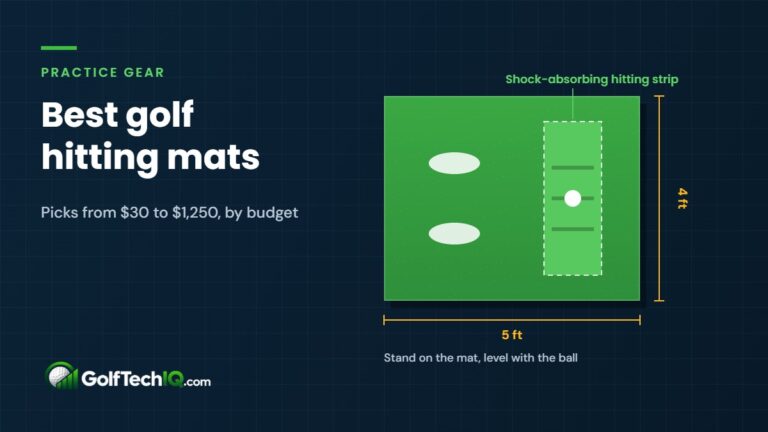 Best Golf Hitting Mats for Home and Simulators (2026)
The best golf hitting mats for home practice and simulators, from $30 backyard mats to $1,250 premium systems, picked by…
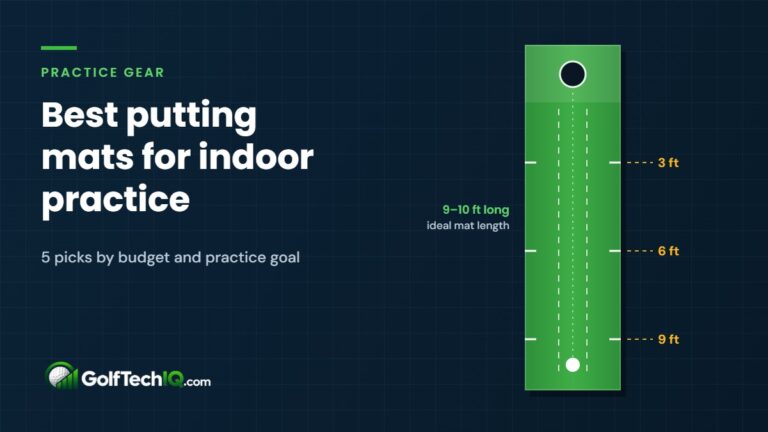 Best Putting Mats for Indoor Practice (2026 Picks)
The best putting mats for indoor practice, picked by size, speed, features and price, from a $50 ball-return mat to…
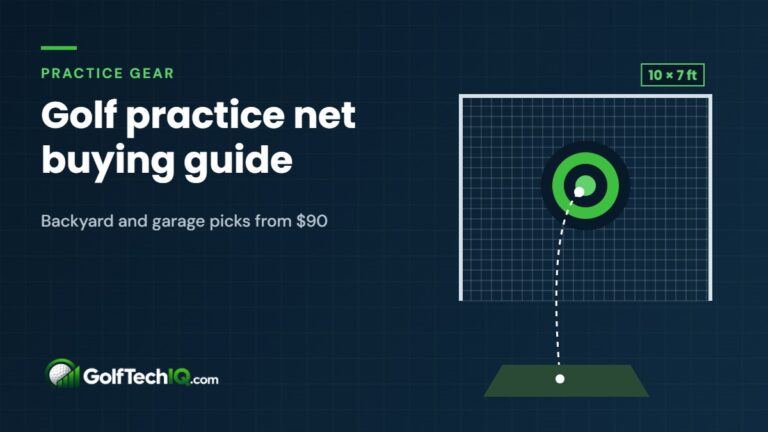 Golf Practice Net: How to Choose the Best Net for Your Backyard or Garage
Most golfers need a 10 x 7 foot practice net. Here is how to choose between portable pop-up nets, ball-return…