

GolfTechIQ is reader-supported. As an Amazon Associate, we earn from qualifying purchases.
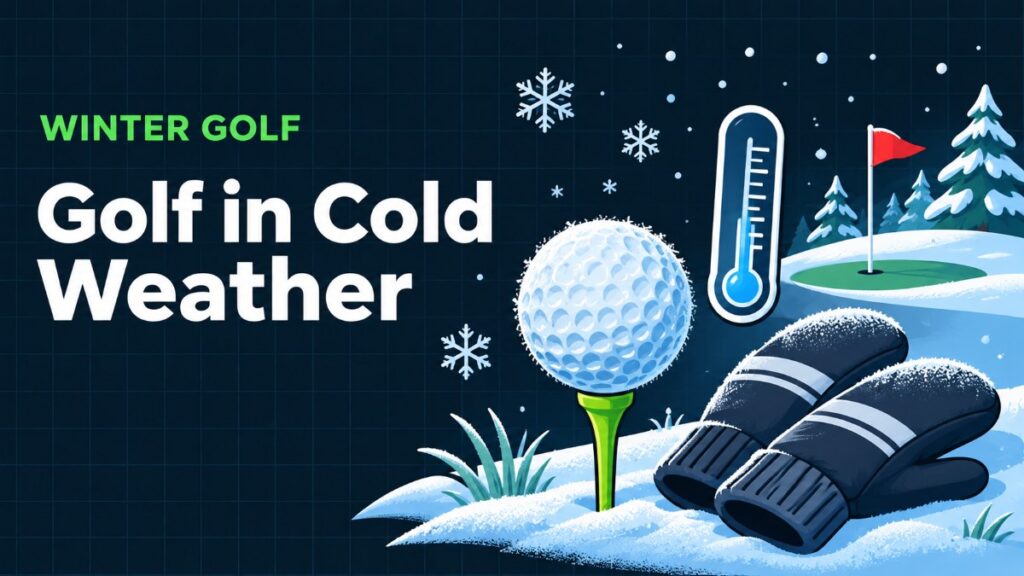
Short answer: Cold air is denser, golf balls are less lively when they’re cold, and your body is stiffer, so expect to lose distance in winter. A common rule of thumb is about 1 to 2 yards of carry for every 10°F drop from the air alone, and the real loss is usually bigger once you add a cold ball and extra layers. Take one or two extra clubs, use a softer ball, and keep your hands and balls warm between shots.
How much distance do you lose in cold weather?
The exact number depends on your swing speed, the ball and the conditions, but this table shows a rough guide for a driver, starting from 70°F.
| Temperature | Rough carry loss from the air | What it feels like |
|---|---|---|
| 60°F | 1–2 yards | Hardly noticeable |
| 50°F | 2–4 yards | About half a club on approach shots |
| 40°F | 3–6 yards | Often a full club with a cold ball |
| 30s°F | 4–8 yards | One to two clubs, plus less roll on soft ground |
Ground conditions can swing this either way: soft, wet fairways kill roll, while frozen ground can send the ball bouncing a long way.
Why golf balls go shorter in the cold
- Denser air: Cold air creates more drag, so the ball doesn’t carry as far.
- A colder, firmer ball: A cold ball feels harder and comes off the face with less speed.
- A stiffer body: Cold muscles and bulky layers shorten your turn and slow your swing.
- Softer turf: Damp winter ground means less roll.
12 tips for golfing in cold weather
- Club up. Take one more club than usual at 50°F and one to two more in the 30s and 40s.
- Use a lower-compression ball. Softer balls compress more easily when it’s cold. See our golf ball compression chart to find one.
- Keep a ball in your pocket. Rotate balls between holes so the one you play isn’t ice cold. In competition, check the rules first, because heating a ball with a device during a round can be a breach.
- Dress in thin layers. A base layer, a light midlayer and a wind shell keep you warm without killing your turn.
- Wear a warm hat. You lose a lot of heat through your head.
- Use winter gloves or mitts. Wear golf mittens between shots and a cold-weather glove to swing.
- Carry hand warmers. Keep a pair in your pockets all round.
- Warm up longer. Do a few minutes of easy stretching and practice swings before the first tee.
- Swing smooth, not hard. A three-quarter swing gives better contact when you’re bundled up.
- Play the ball low. Punch shots and bump-and-runs are easier to control in wind and on firm ground.
- Expect slower greens after rain and faster ones when firm. Take a few practice putts to check the speed.
- Respect frost delays. Walking on frosted grass damages it, so courses hold tee times until it melts.
Cold-weather golf gear worth having
A few inexpensive items make winter rounds much more comfortable.
Too cold to get out at all? Keep your swing in shape indoors with a net or simulator. Start with our guide to the best golf net for a garage.
Frequently asked questions
How cold is too cold for golf?
Many golfers keep playing into the 40s and even the 30s if it’s dry and not too windy. Below freezing, frost delays and frozen greens often make play hard or impossible, and many courses close.
Does a golf ball go shorter in cold weather?
Yes. Denser air, a firmer cold ball and a slower swing all cut distance. Expect at least a few yards less carry at 50°F and more as it gets colder.
What golf ball is best for cold weather?
A lower-compression ball usually feels better and loses less distance in the cold, especially if your swing speed is moderate.
Should I keep my golf balls warm?
Keeping balls in a pocket between holes helps them feel livelier. Don’t store them in a freezing car overnight before a round. In competition, check the rules before using any device to warm a ball.
Do greens play faster or slower in winter?
It depends. Wet, soft greens play slower, while firm or frozen greens can be fast and bouncy. Practice putts before the round tell you which to expect.
Keep reading
 Golf Scoring Terms: Birdie, Eagle, Bogey and More
Every golf scoring term explained, from birdie and bogey to albatross, condor, net score and match play terms, with a…
 TaylorMade Spider Putter Guide (2026): Every Model Compared
Every 2026 TaylorMade Spider putter compared, from the $349.99 Spider Tour family to the zero-torque Spider ZT Max, plus how…
 Mini Golf Rules: How to Play and Score Putt Putt
The standard mini golf (putt putt) rules: stroke limits, out-of-bounds and wall rules, scoring, tiebreakers, etiquette and tips for a…