

GolfTechIQ is reader-supported. When you buy through links on this page, we may earn a commission at no extra cost to you. As an Amazon Associate, we earn from qualifying purchases.
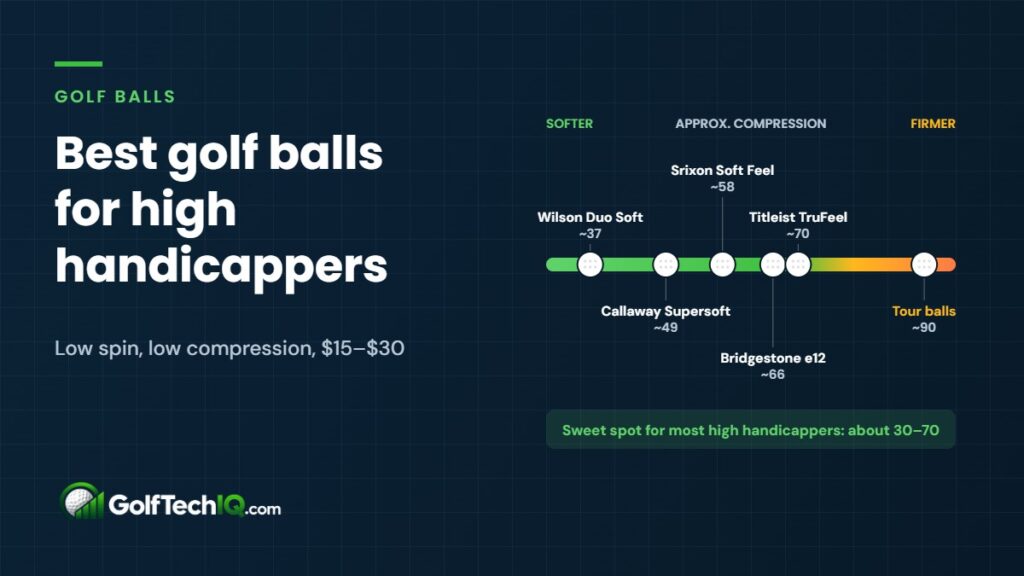
Short answer: high handicappers should play a low-compression, low-spin, two-piece ball that costs about $15–$30 a dozen, not a $55 tour ball. Our top pick is the Titleist TruFeel (about $25): in robot testing it was among the longest and lowest-spinning balls at average swing speeds. If you slice, try the Bridgestone e12 Straight, which is built to reduce sidespin. For the softest feel, the Wilson Duo Soft is hard to beat. If you lose a lot of balls, the Amazon Basics Core Soft or Pinnacle Soft cost about $15–$18 a dozen.
We picked these by the numbers: driver spin, distance at slower swing speeds, compression and price per dozen. Prices are typical U.S. list prices as of October 2026 and change often.
Best golf balls for high handicappers at a glance
| Best for | Golf ball | Compression | Price per dozen |
|---|---|---|---|
| Best overall | Titleist TruFeel | About 70 | About $25 |
| Best for a slice | Bridgestone e12 Straight | About 66 | $30–$35 |
| Softest feel | Wilson Duo Soft | About 37 | About $25 |
| Drives that balloon | Srixon Soft Feel | About 58 | About $25 |
| Soft feel, bright colors | Callaway Supersoft | About 49 | About $27 |
| Lose a lot of balls | Amazon Basics Core Soft or Pinnacle Soft | About 55 | $15–$18 |
1. Titleist TruFeel: best overall
Titleist’s cheapest ball is also one of the best for average swings. In BallCaddie’s 48-ball robot test, it finished 4th for total distance at an 86 mph driver swing and had some of the lowest driver spin at both 86 and 102 mph. Low spin means less curve on mishits. It’s a little firmer than the softest balls here, so it feels less mushy.
Check Titleist TruFeel price on Amazon
2. Bridgestone e12 Straight: best for a slice
The one ball here designed specifically to reduce sidespin, so slices and hooks curve less. It was among the tightest left-to-right in testing and second-longest off a slow-speed iron. It’s a three-piece ball and costs about $10 more per dozen than the two-piece picks, but if your big miss is a slice, it’s worth it.
Check Bridgestone e12 price on Amazon
3. Wilson Duo Soft: softest feel
At roughly 37 compression, it’s one of the softest balls you can buy, built for high launch and low spin at about $25 a dozen. A good choice for slower swing speeds and for golfers who want a soft feel off the putter.
Check Wilson Duo Soft price on Amazon
4. Srixon Soft Feel: best if your drives balloon
One of the lowest-spinning balls off the driver at 86 mph and the lowest-flying ball in the test. If your drives climb high and drift right, it flattens the flight. The trade-off: less spin on chips, so expect more rollout around the green.
Check Srixon Soft Feel price on Amazon
5. Callaway Supersoft: soft feel and bright colors
One of the best-selling value balls, with a very soft feel and lots of colors that are easier to find in the rough. It had the lowest driver spin at 86 mph in BallCaddie’s test, but also the slowest ball speed and shortest carry, so choose it for feel and visibility rather than distance.
Check Callaway Supersoft price on Amazon
6. Amazon Basics Core Soft or Pinnacle Soft: if you lose a lot of balls
At about $15–$18 a dozen, these are the cheapest balls worth playing. The Amazon Basics Core Soft was BallCaddie’s budget pick for slower swings. If you lose three or more balls a round, the savings add up fast.
Check Amazon Basics golf balls price
How to choose a golf ball as a high handicapper
- Low driver spin matters most. Spin is what turns a slightly open face into a big slice. Lower-spinning balls curve less on mishits.
- Low compression suits slower swings. Most high handicappers do well between about 30 and 70 compression. Above roughly 95 mph of driver speed, firmer balls make more sense.
- Skip tour balls for now. Premium urethane balls (around 90 compression) mainly add greenside spin, which inconsistent contact rarely uses.
- Count the cost of lost balls. Losing two balls a round over 30 rounds costs about $290 with $58 balls versus about $125 with $25 balls. The difference could pay for lessons.
- Pick one model and stick with it, so you know your misses come from your swing, not the ball.
When to switch to a premium ball
Consider a urethane tour ball once your handicap is around 18 or lower, your driver speed is consistently 88 mph or more, or you’re getting up and down from inside 50 yards regularly. A launch monitor makes this easy to check: it shows your ball speed and spin, so you can compare balls by the numbers. See our Garmin R10 vs. Rapsodo MLM2PRO comparison, and pair a forgiving ball with one of the best drivers for beginners.
FAQ
What golf ball should a high handicapper use?
A low-compression, low-spin, two-piece ball in the $15–$30 range, like the Titleist TruFeel, Srixon Soft Feel or Wilson Duo Soft. If you slice, try the Bridgestone e12 Straight.
Should a high handicapper use a Pro V1?
Usually not. A Pro V1’s main advantage is greenside spin and control, which matters most for consistent ball-strikers. Most high handicappers score the same or better with a cheaper, lower-spinning ball and lose less money on lost balls.
Do soft golf balls go farther?
Not automatically. Soft, low-compression balls feel better and spin less, which keeps slower-swing drives straighter. In testing, slightly firmer balls were often a little faster off the driver, so the best ball balances feel, spin and speed.
What is the best cheap golf ball?
The Amazon Basics Core Soft and Pinnacle Soft cost about $15–$18 a dozen and are good options if you lose several balls a round.
Sources: BallCaddie, best golf balls for high handicappers (robot test data); Stymie, best golf balls for high handicaps.
Keep reading
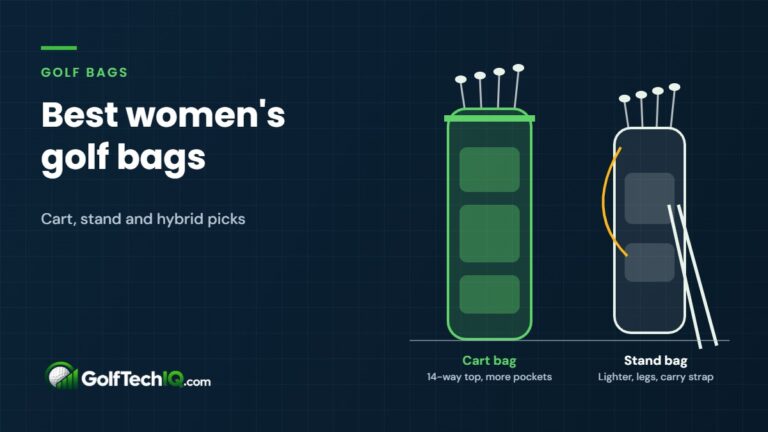 Best Women’s Golf Bags (2026): Cart and Stand Bag Picks
The best women's golf bags for riding or walking: cart, stand and hybrid bags compared on weight, dividers, pockets and…
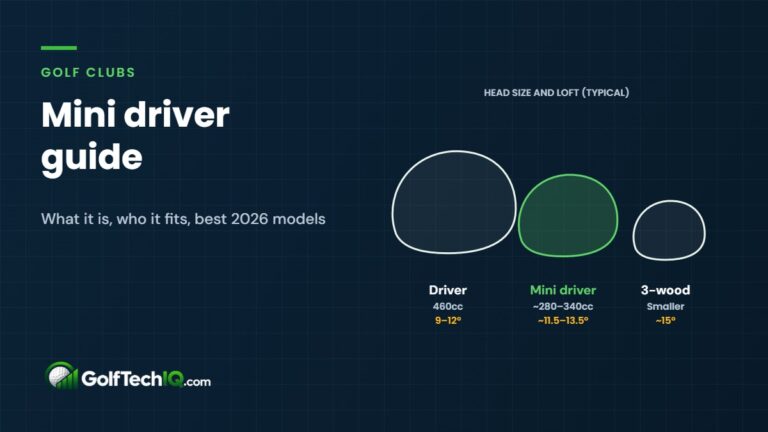 Mini Driver Guide: What It Is and the Best Mini Drivers (2026)
What a mini driver is, who should use one, how it compares with a driver and 3-wood, and the best…
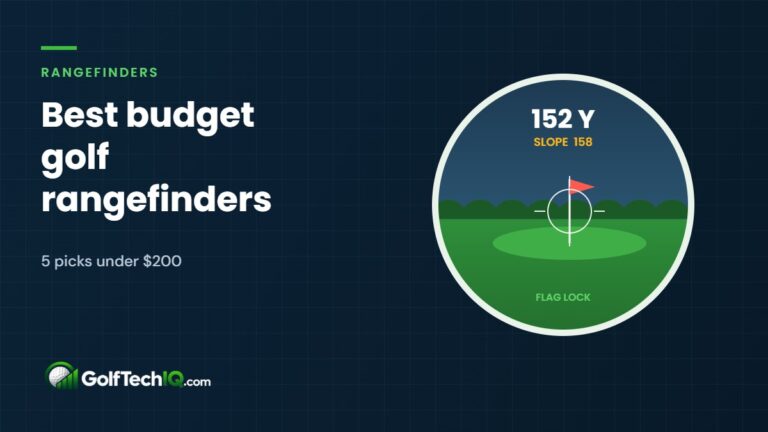 Best Budget Golf Rangefinders (2026): 5 Picks Under $200
The best budget golf rangefinders, from an $80 slope laser to $200 rechargeable models, compared on slope, features, accuracy and…